
Do some Zellige colors have higher variation than others?
Do Some Zellige Colours Have More Variation Than Others?
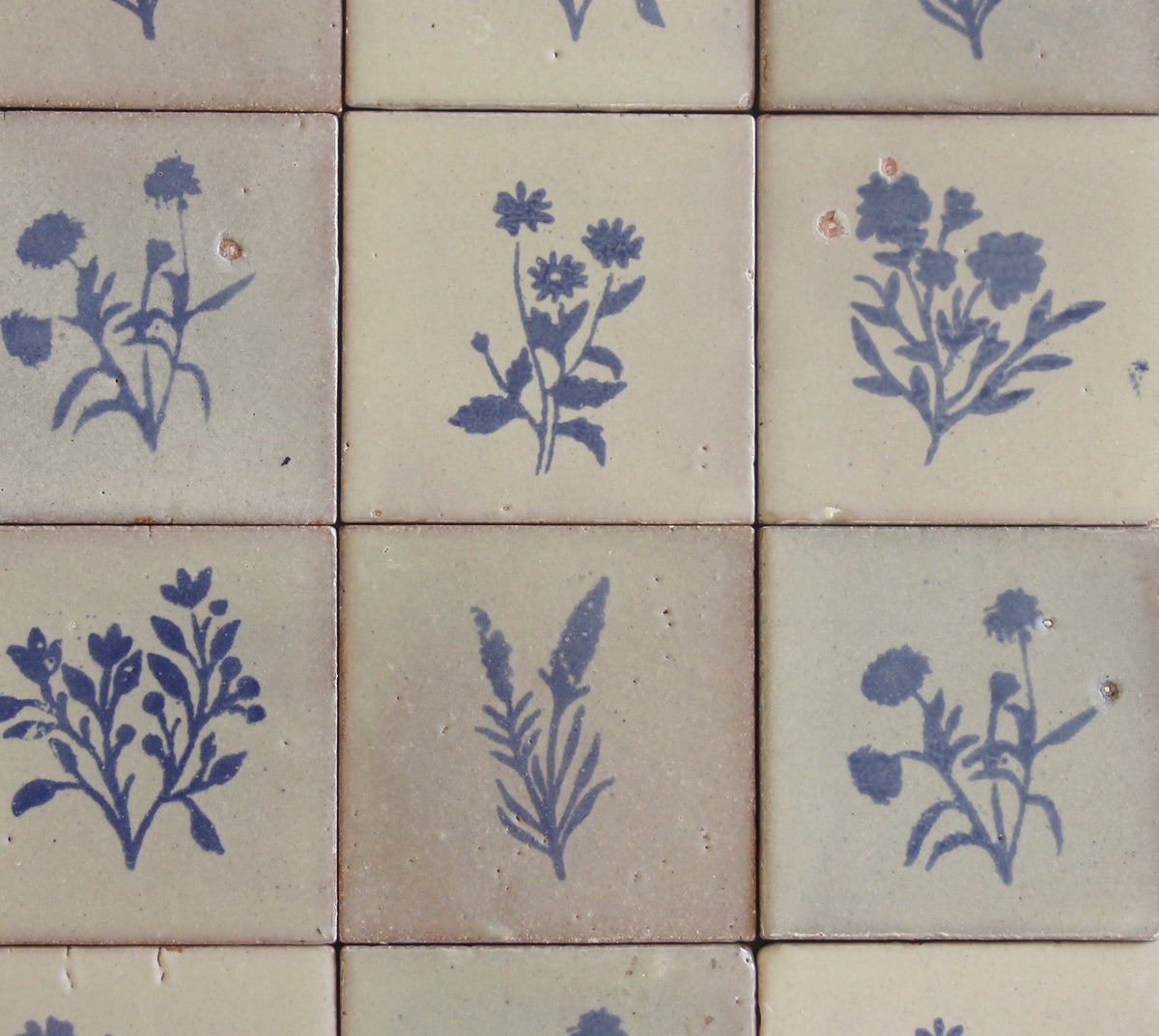
Yes. If you’ve ever compared different Zellige colours, you may have noticed that some have a much broader variation in tone than others. One colour might move subtly between shades, while another can appear to shift quite dramatically from tile to tile, sometimes even producing distinct tonal batches within the same order.
It is the result of the way Zellige is made.
Why does Zellige vary in colour?
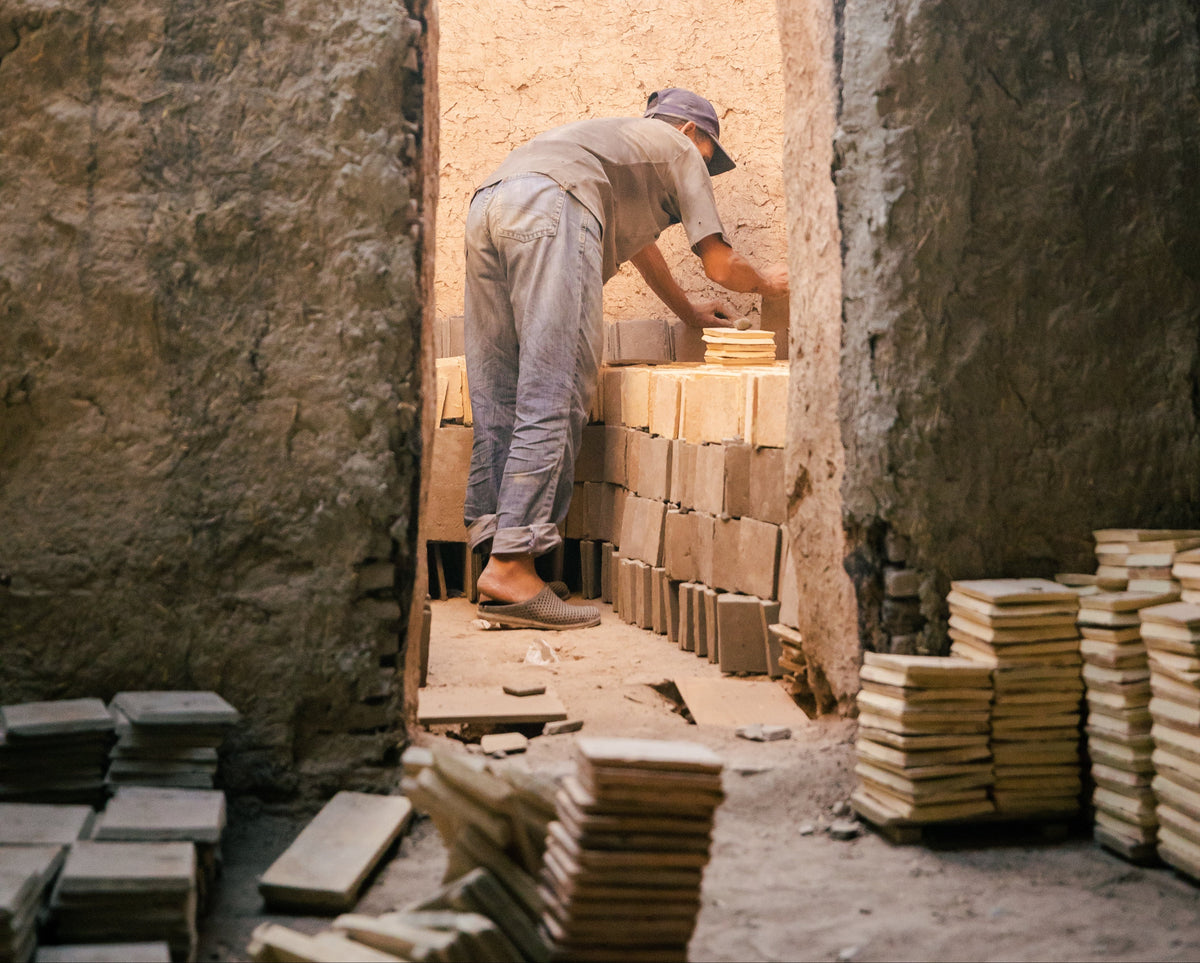
Zellige is handmade, and unlike a machine-made tile where every tile is designed to be as consistent as possible, Zellige is created through a process that naturally produces variation. One of the most important parts of that process happens inside the kiln. When the glazed tiles are fired, heat moves naturally through the kiln. The position of each tile within the kiln means that each piece can experience slightly different heat conditions during firing. At the same time, the glaze itself is undergoing a chemical reaction as it is exposed to the intense heat of the kiln. The combination of glaze chemistry, heat and kiln placement creates the tonal variation that is characteristic of Zellige.
The glaze is doing the work
The glaze isn't simply a colour that is painted onto the surface and then permanently fixed. During firing, the glaze undergoes a chemical transformation. As the temperature rises, the ingredients within the glaze react with one another and with the ceramic body beneath it. The final colour and finish are determined by this complex interaction between the glaze, the clay and the firing conditions. Because the heat within a kiln naturally moves and varies, the same glaze can respond slightly differently from one tile to another. This is one of the reasons Zellige has such incredible depth. You aren't looking at one flat, perfectly uniform colour. You're looking at the result of a material reacting to heat.
Why do some colours vary more than others?
This is where glaze chemistry becomes particularly important. Not every glaze reacts to firing in the same way. Some glaze formulations are relatively stable and produce a narrower range of tonal variation. Others are much more reactive to changes in firing conditions and can produce a considerably broader spectrum of colour. This means that two Zellige colours can be fired in the same kiln, at the same time, and still behave very differently. One may come out relatively consistent, while another may produce tiles ranging through several beautiful tonal variations. Some colours can even emerge in distinct tonal batches, where a group of tiles has a noticeably different tone from another group produced within the same manufacturing cycle. This is simply part of the behaviour of that particular glaze.
Why does the placement of the tile in the kiln matter?
Think of a kiln as an environment rather than a perfectly uniform oven. Heat moves throughout the kiln, and the exact position of a tile can influence the conditions it experiences during firing. Tiles positioned in different areas can therefore experience subtle differences in temperature and heat movement. When a reactive glaze is exposed to these differences, it can respond differently. The result....Variation...and this is one of the beautiful things about Zellige.The variation isn't added afterwards. It is created naturally during the firing process itself.
Can the same colour look different from one batch to another?
Yes. This is particularly true for colours with a naturally high degree of glaze variation. A glaze may produce one tonal range during one production cycle and another range during a subsequent cycle. This doesn't mean that the colour has changed or that something has gone wrong. It is simply the nature of a handmade, kiln-fired product. This is also why it is important to understand that a small physical sample can never necessarily represent every tone that may appear across a larger installation. A sample gives you an indication of the colour and character of the glaze, but the finished installation will reveal the full story.
Is variation a defect?
No. Variation is an inherent characteristic of handmade Zellige.
In fact, attempting to eliminate all variation would fundamentally change what makes Zellige special. The subtle shifts in tone allow the surface to interact with light differently from tile to tile. Some pieces catch the light, others recede into shadow, and the overall surface develops a depth that is difficult to achieve with a perfectly uniform tile.This is why two installations using the same Zellige colour can still look completely different.The tile is responding to its environment as well as to the way it was fired.
Why do we recommend blending your tiles?
Because variation is an intentional part of the material, we recommend blending tiles from all boxes throughout your installation. Rather than installing one box at a time, mix tiles from multiple boxes and lay them out before fixing them permanently. This allows you to distribute the tonal variation across the surface and avoid creating unintended areas of concentrated colour. For particularly varied colours, this step becomes even more important. Your installer should work with you to determine how you want the tones distributed and how much variation you would like to see in different areas of the installation.
The beauty is in the firing
The next time you look at a Zellige tile and notice that one piece is slightly lighter, another deeper, and another somewhere beautifully in between, you're looking at the evidence of its making. The variation isn't a printing error. It isn't a batch defect and it isn't something added to make the tile look handmade. It is the result of natural clay, reactive glaze, intense heat and the movement of the kiln coming together.Some colours simply have glazes that are more reactive than others, which means they will naturally display a greater range of variation, and that's exactly what makes them so special. Every Zellige tile has been through the fire, and every tile tells you a little bit about what happened there.