
The Science of Choosing Tiles
How Do You Choose the Tile You'll Love Forever?
The science behind choosing a tile is… well, there is no science. Design is deeply personal. There is no universally right or wrong tile, no single formula for creating a beautiful room, and certainly no rule that says you have to choose what everyone else is choosing. In fact, this is precisely why we feel so passionately about embracing your own aesthetic.
The tile you'll love forever isn't necessarily the most expensive, the most practical, the most timeless, or the one currently filling your Pinterest feed. It's the one that feels right for you. That said, there are a few things worth considering before you commit.
HOT TIP #1: DO YOU
When it comes to choosing tiles for your home, a truly timeless choice is one that speaks to you and not one that is simply the by product of a trend. Before you start looking at colours, shapes and patterns, think about something much more important: how do you want to feel in the room? Do you want it to feel calm and quiet? Warm and earthy? Playful? Dramatic? Soft? Collected? A little bit unexpected? Start there.
We see it time and time again. People become completely overwhelmed by the number of choices available and, somewhere along the way, lose sight of what they actually love. They choose the safe option. A large format neutral tile. Something grey. Something inexpensive. Something that is perfectly fine. Then they add a feature tile in the splashback or shower niche because they still want a little personality.
And while there is absolutely nothing wrong with a neutral bathroom, choosing something simply because it feels "safe" is very different from choosing it because you genuinely love it. If we had a dollar for every time someone told us, "It's safe and it does the job," we'd be pretty darn rich.
The irony is that the tiles people are most afraid to choose are often the ones they end up loving the most. So trust yourself. Look at the tile you keep coming back to. The one you can't stop thinking about. The one that makes you slightly nervous because it feels like a choice. There's probably a reason.
HOT TIP #2: BE PRACTICAL
Now, before we tell you to throw caution entirely to the wind, there is one very important thing to remember: your tiles need to work for the way you live. The most beautiful tile in the world won't make you happy if it drives you mad every day.
Think about what matters to you personally. Do you hate grout lines? Perhaps a tiny mosaic isn't for you. Do you love the look of natural ageing and patina? Then a material that remains pristine and unchanged may ultimately feel too clinical. Do you have children, pets, a busy household or a kitchen floor that sees a lot of action? Think about how the material will respond to real life.
There is no universal definition of "practical." What is practical for one person can be completely impractical for another. This is where the magic happens: marrying your practical needs with your aesthetic dreams. Because you shouldn't have to choose between a beautiful home and a functional one.
HOT TIP #3: TRAFFIC DOESN'T HAVE TO MEAN TRAGIC
High traffic areas deserve a little extra consideration, but that doesn't mean you need to sacrifice character. Kitchens, hallways and entryways inevitably see more action. Food, oil, dirt, muddy shoes and the occasional dropped glass are all part of life. When selecting a tile for these spaces, consider the material's porosity, how it responds to staining, whether it can be sealed, and how it can be cleaned and maintained over time.
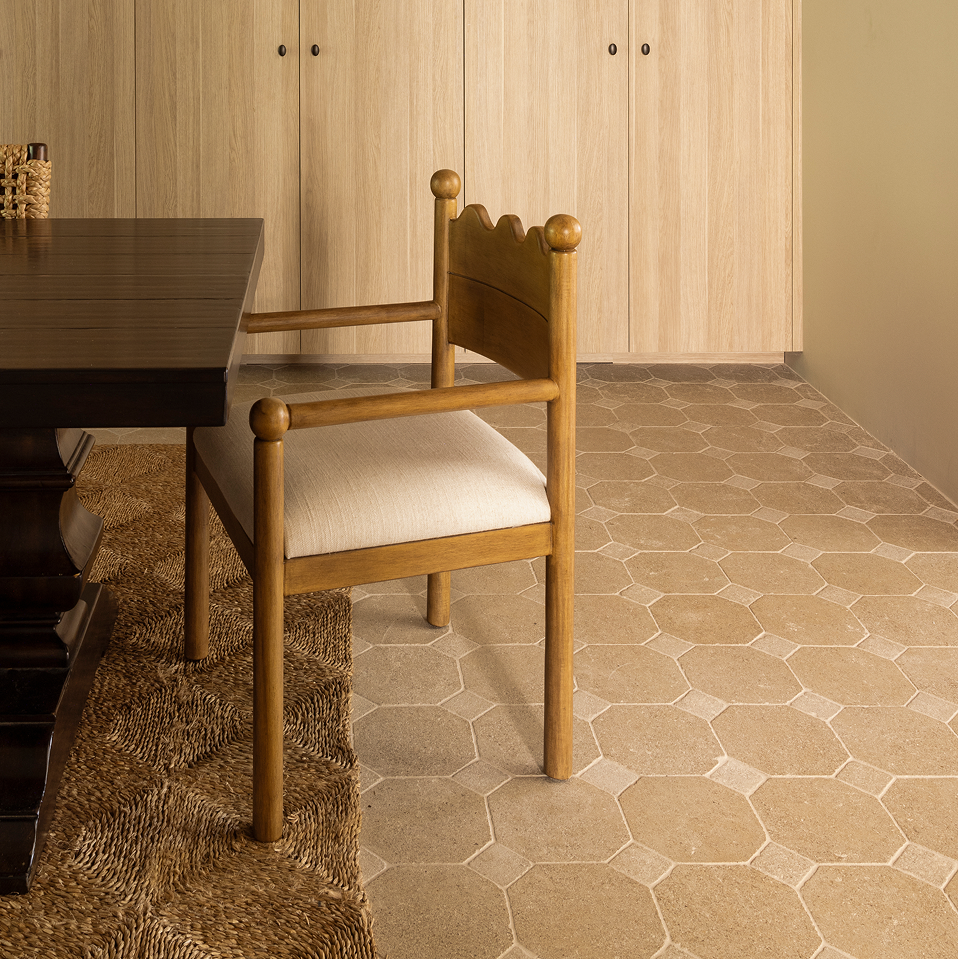
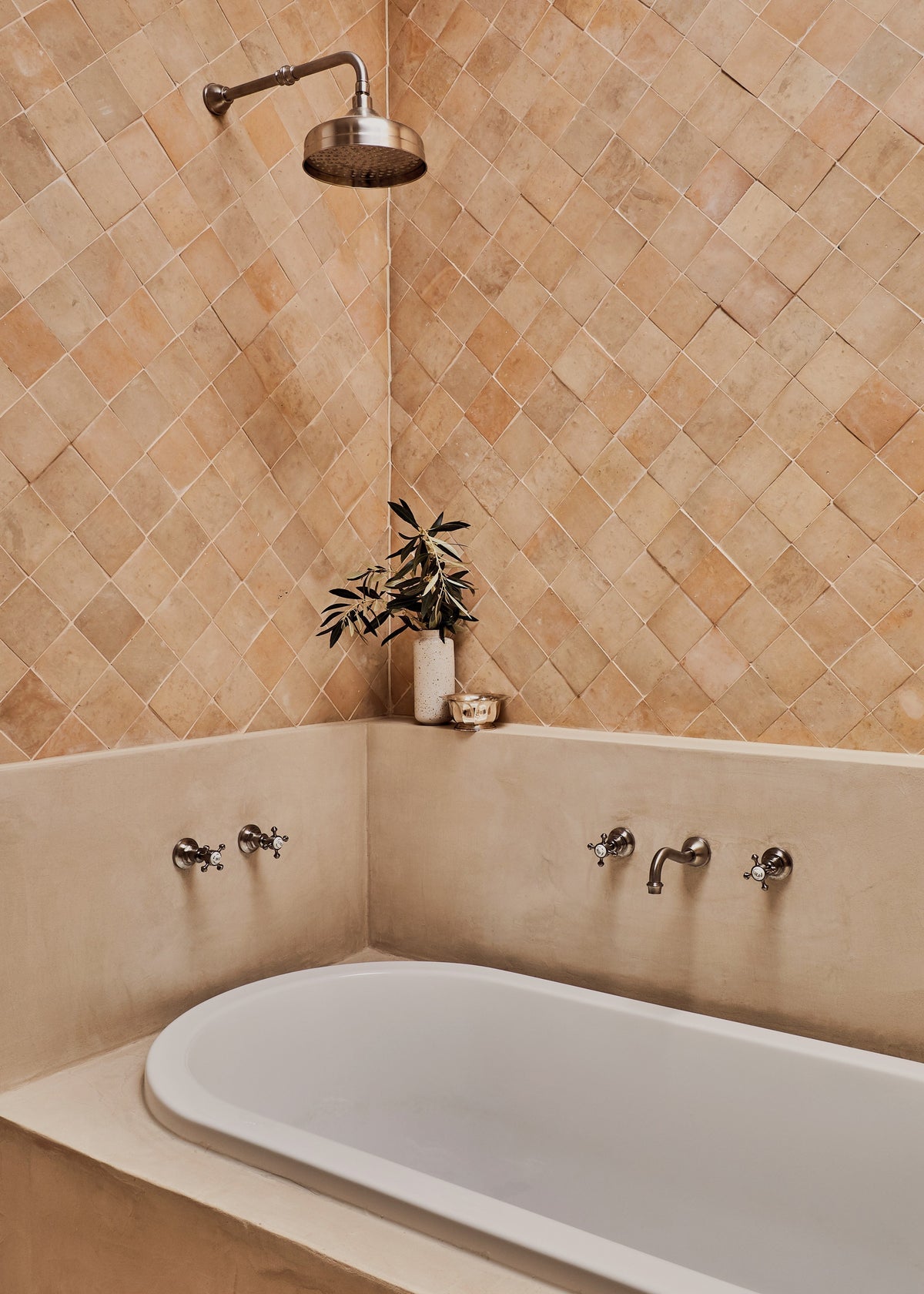
Different materials behave differently. Porcelain and ceramic tiles are often chosen for their durability and relatively low maintenance. Handmade tiles, meanwhile, bring something else entirely to a space: variation, texture, warmth and a sense of humanity that can be difficult to replicate in a mass produced material. And then there are materials such as cement tile, which are beautiful precisely because they develop character over time, but require a little more ongoing care.
There is no "best" material. There is only the material that best suits you, your space and the way you live. And don't forget about colour and pattern. A beautifully tonal or patterned floor can be incredibly forgiving of everyday marks and spills, while a completely uniform, pale surface may reveal every tiny footprint. Sometimes the most practical choice is also the most beautiful. That's our favourite kind.
HOT TIP #4: THE ART OF ILLUSION
Small space? No problem. Tiles are one of our favourite tools for manipulating how a room feels. If you're working with a small bathroom, you can take the design in two very different directions. You can minimise visual interruption with larger format tiles and fewer grout lines, helping the room feel calm, continuous and expansive. Or you can go completely the other way and embrace the small scale. Think intricate mosaics, smaller formats and lots of detail.
And here's the thing: there is no single tile shape that is "best" for a small bathroom. It's about understanding the overall composition. Want to emphasise ceiling height? Try laying a rectangular tile vertically to draw the eye upwards. Want to create a sense of continuity? Consider carrying the same material across multiple surfaces. Want the room to feel immersive? Wrap the tile around the space rather than treating each wall as a separate moment.
Small spaces don't necessarily need to be made to look bigger. Sometimes they are better made to feel more intentional.
HOT TIP #5: COLOUR MATTERS
Never underestimate the power of colour. Colour changes the entire emotional temperature of a room. Lighter colours can make a space feel brighter and more open. Darker colours can create depth, intimacy and mood. Warm tones can make a room feel enveloping and earthy, while cooler tones can create a sense of calm.
But again, there are no hard and fast rules. A small bathroom doesn't have to be white. A dark bathroom isn't automatically going to feel smaller. And colour isn't simply about whether a room looks bigger or smaller. It's about how you want the room to feel.
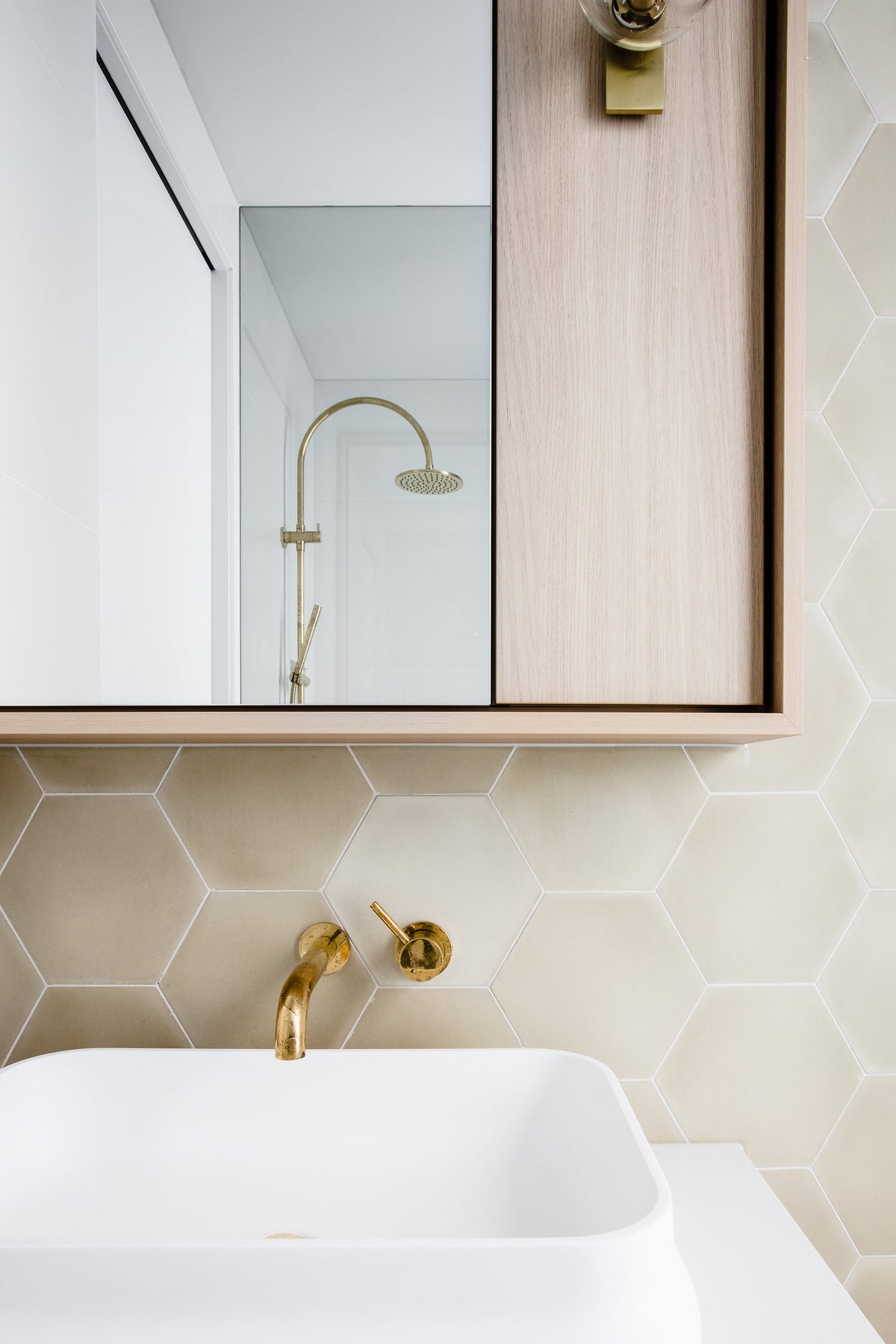
Take something like our EZR1010 in Dust. Its soft, light tone can help a smaller space feel bright and open, while the handmade nature of the tile introduces tonal variation and subtle imperfection. That variation is important. It stops a light space from feeling flat. Because sometimes what a room needs isn't more colour. It needs more texture, more depth and more character.
SO, WHAT TILE WILL YOU LOVE FOREVER?
Here's the secret: you probably already know. It's the tile you keep saving. The one you return to. The one that makes you feel something. The one that perhaps feels a little less obvious than the safe choice.
Of course, you should consider your space, your lifestyle, your maintenance expectations and the practical requirements of the application. But once you've done all of that? Trust your gut.
Trends come and go. Bathrooms get renovated. Pinterest moves on to the next thing. But a home that genuinely reflects the people who live in it will always feel good.