



Dunya Stone & Mosaics FAQ
Frequently Asked Questions
Dunya Natural stone & Mosaic tiles - Frequently Asked Questions
Celebrated for their natural beauty and variation, each stone in the Dunya Stone range brings a timeless, considered finish to any space. Here, we cover everything you need to know about our natural stone tiles - from selecting the right stone and layout to installation and long-term care - so you can specify Dunya Stone with confidence.
The Material
What type of natural stone tiles are used in the Dunya Stone range?
Dunya Stone is a natural stone tile collection sourced from quarries across the world, selected for each stones organic movement, colour, tonal depth, and refined surface texture. The range includes travertine tiles, limestone tiles, and marble tiles - each with their own character, origin, and surface quality. Every tile is cut from natural stone blocks, meaning no two pieces are identical. The range celebrates the raw beauty of natural stone while offering a considered, design-led palette suited to both contemporary and timeless interiors.
Where do Tilesofezra Dunya Stone natural stone tiles come from?
The natural stone tiles in the Dunya Stone range are sourced from quarries across the world - each selected for the specific qualities that make it worth using. Our stones come from Turkey, Italy, Spain, Montenegro, and India.
What is travertine tile - and how is it different from limestone tile or marble tile?
Travertine tile is a natural limestone formed by mineral-rich hot springs, where calcium carbonate is deposited in layers over thousands of years. It is characterised by its warm earth tones, distinctive pitted surface, and natural holes formed by gases escaping during the stone's creation. Limestone tile is a sedimentary stone, typically softer in tone and surface movement. Marble tile is metamorphic - formed under intense heat and pressure - and is generally denser, veinier, and harder than travertine or limestone. All three natural stone tile types appear in the Dunya Stone range, each with its own character and care requirements.
Do the Tiles of Ezra Dunya Stone travertine tiles have natural holes in the surface - and is that normal?
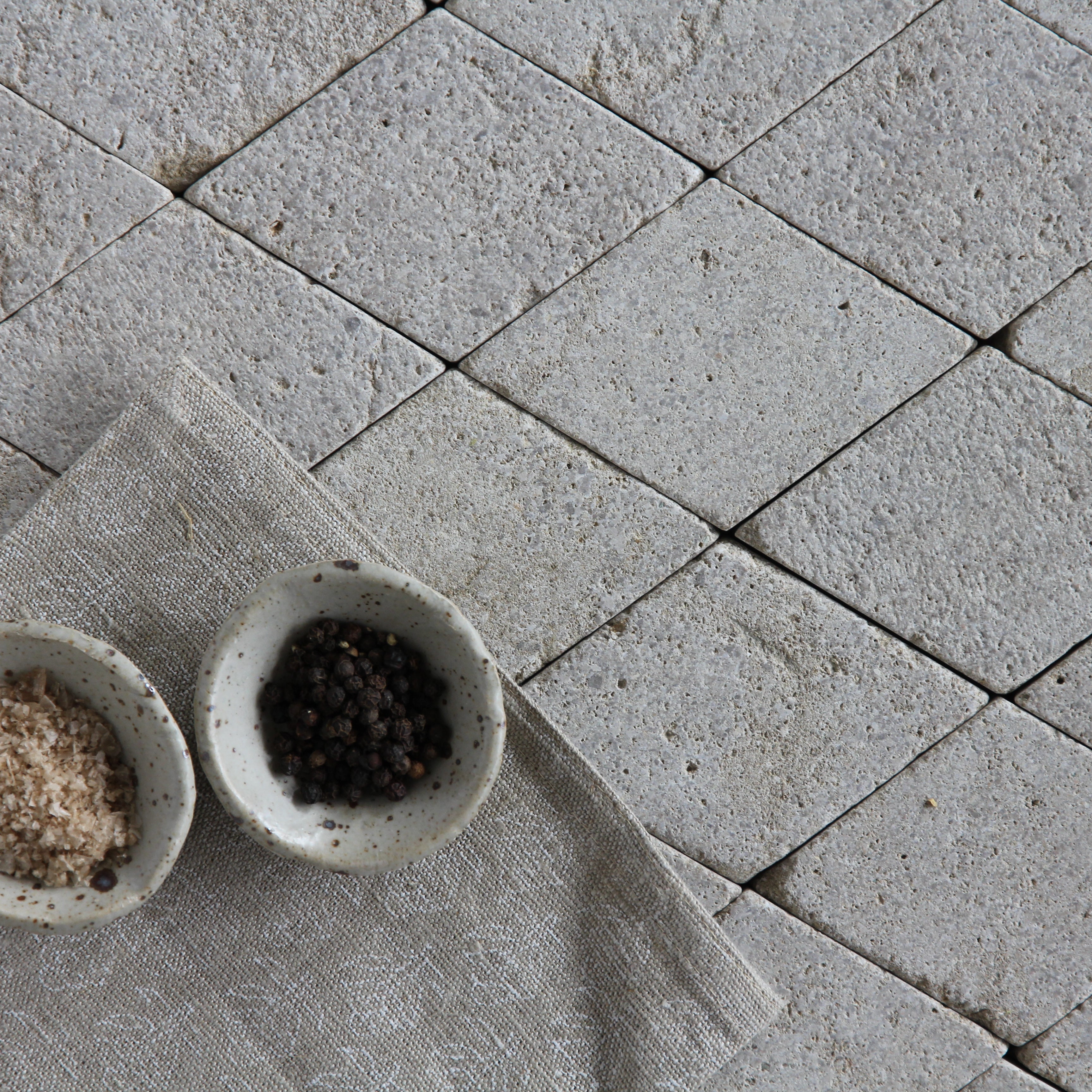
Yes. The small pits and voids visible in travertine tiles are a completely natural feature of the stone, formed during its creation as gases escaped through the calcium carbonate layers. They are part of what makes travertine unmistakably itself. All Dunya Stone travertine tiles are supplied unfilled - meaning the holes arrive exactly as the stone formed, open and visible. This is a deliberate choice.
To fill or not to fill - that is entirely your decision.
If you choose to leave the holes unfilled, you preserve the most authentic expression of the material. The consideration to be aware of is that over time - particularly on floors - dirt, dust, and debris can settle into the holes and become compacted, making them harder to clean with standard mopping. A stiff bristle brush with a pH-neutral stone cleaner and warm water, followed by a thorough rinse, is the most effective way to lift compacted dirt from the voids. In outdoor settings, a pressure hose works well. Sealing the stone regularly also helps - a good penetrating sealer makes the surface more resistant to dirt embedding in the first place.
If you choose to fill the holes, your installer can do this during the grouting process using a colour-matched grout. We recommend selecting a lighter, neutral tone - a grout colour that is too dark can make the surface read as permanently dirty. Filling creates a smoother, easier-to-maintain surface while still retaining all the natural variation, veining, and character of the stone.
Neither approach is wrong nor right. It comes down to the aesthetic you are after and the maintenance commitment you are comfortable with. If you are unsure, speak with our team before installation and we can help guide the decision based on your specific application.
How are our Dunya Stone natural stone tiles different from porcelain or ceramic tiles?
Unlike porcelain or ceramic tiles, Our Dunya Stone is a naturally formed material - not manufactured. This means natural stone tiles carry authentic variation in colour, veining, texture, and mineral inclusions that cannot be replicated artificially. While porcelain tiles offer uniformity and technical predictability, Dunya Stone natural stone tiles offer depth, warmth, and character, making them ideal for spaces where materiality and authenticity are prioritised.
What natural variation should I expect in colour, veining, and texture from Dunya Stone tiles?
Variation is an inherent and defining characteristic of Dunya Stone natural stone tiles. Expect natural shifts in tone, veining, fossil markings, and surface texture across tiles and batches. This variation is part of the stone's authenticity and should be embraced as a design feature rather than viewed as inconsistency. For best results, we recommend ordering sufficient natural stone tile from a single batch. Please review the Dunya Stone specification sheets in our Resources section to understand the expected level of variation from stone to stone.
What finishes are available in the Dunya Stone natural stone tile range?
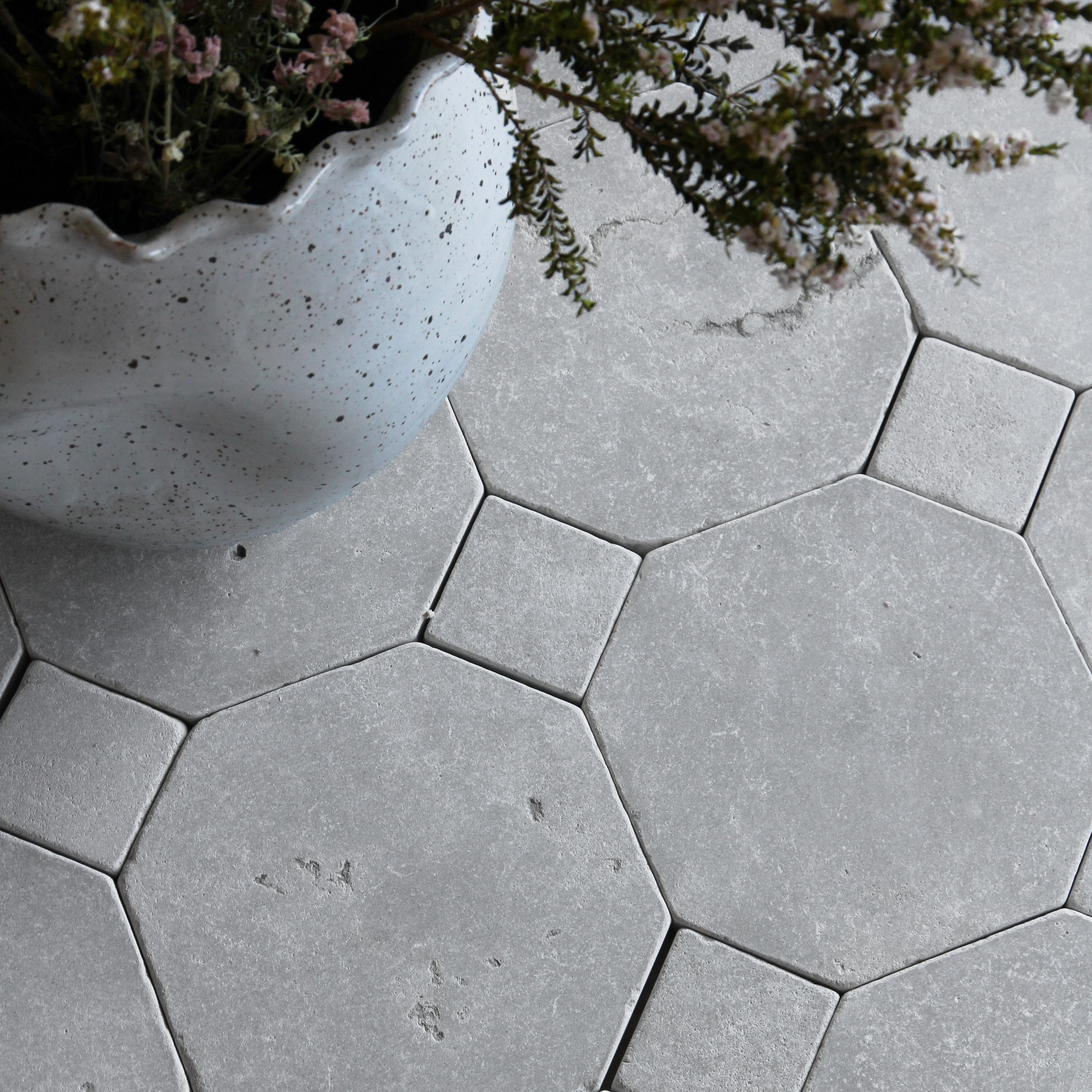
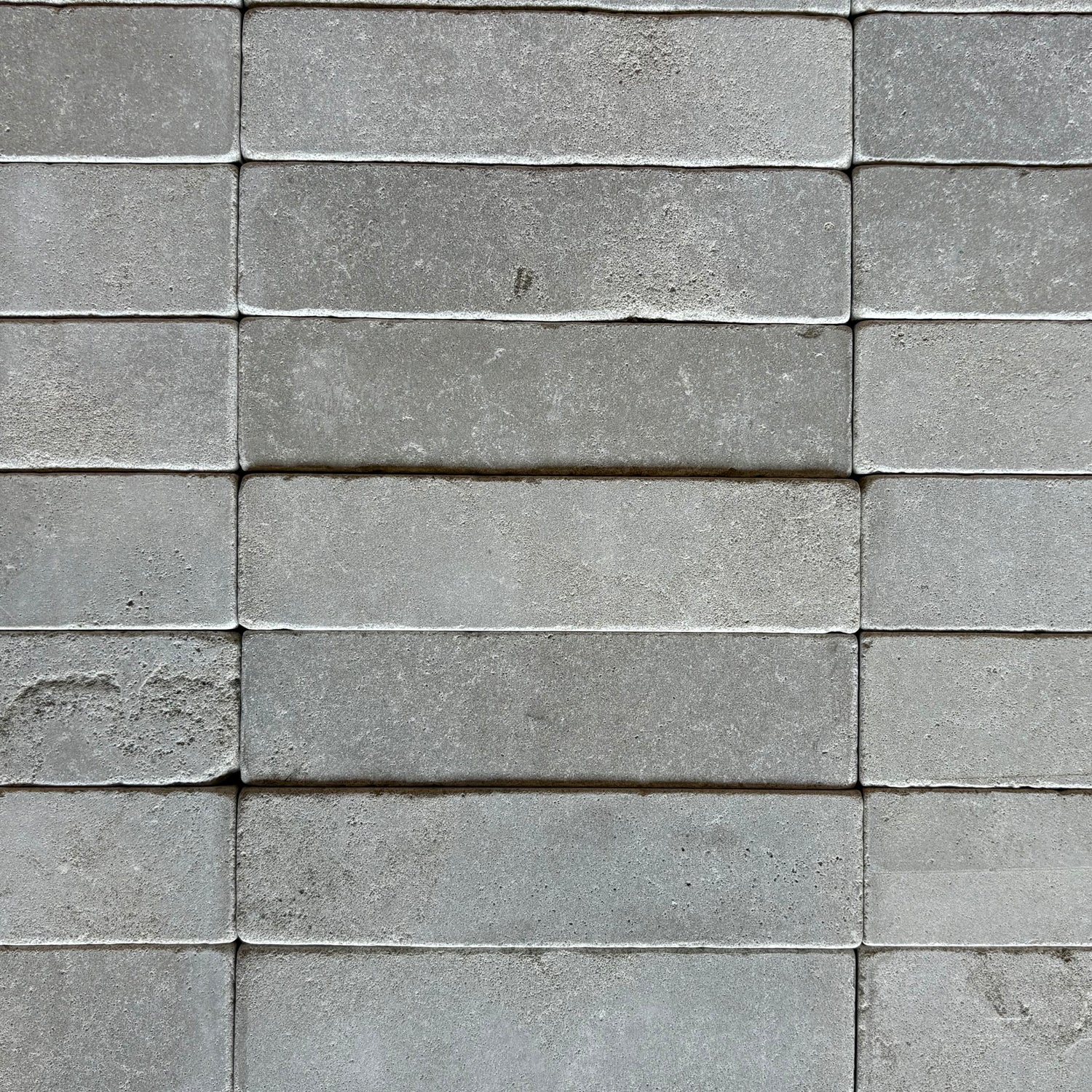
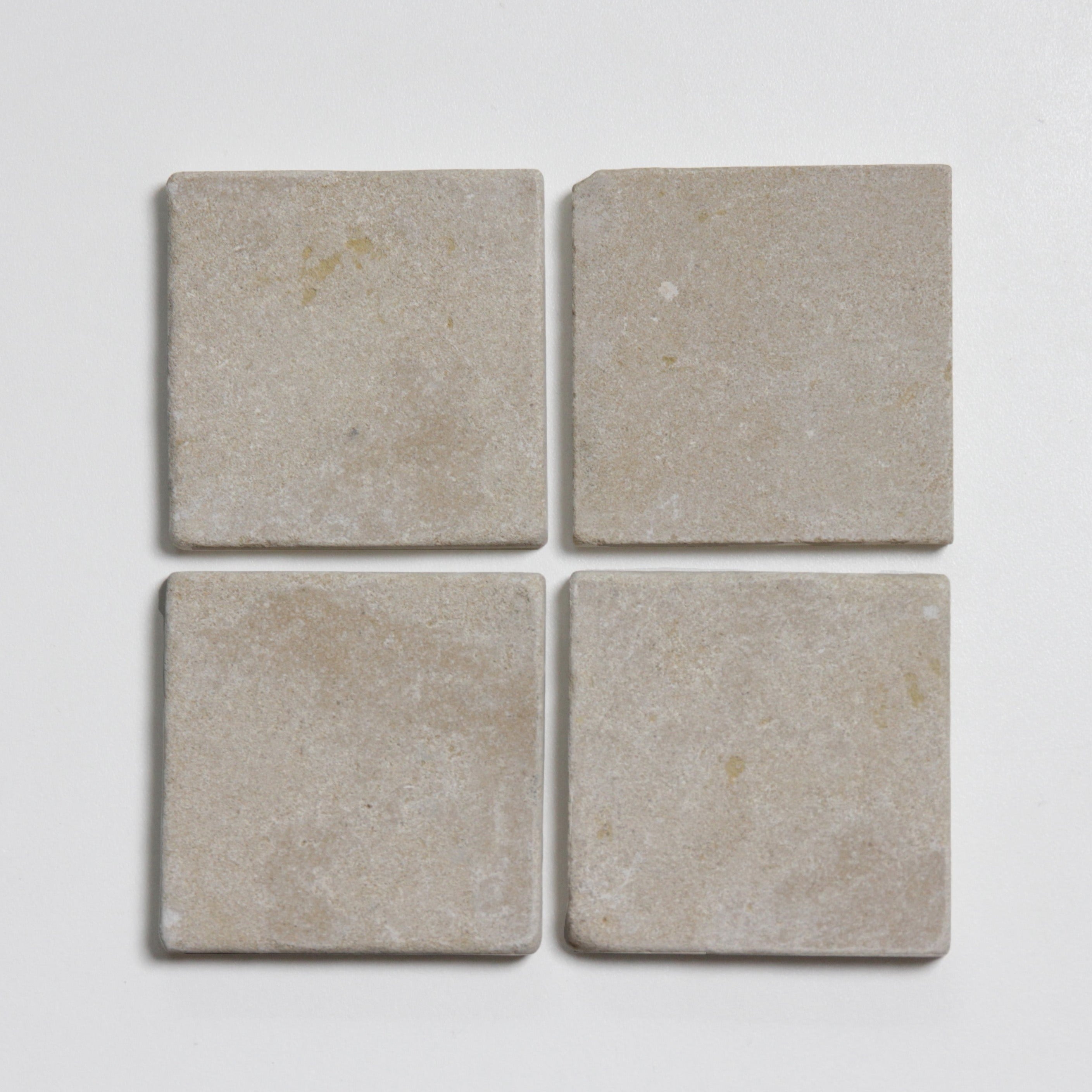
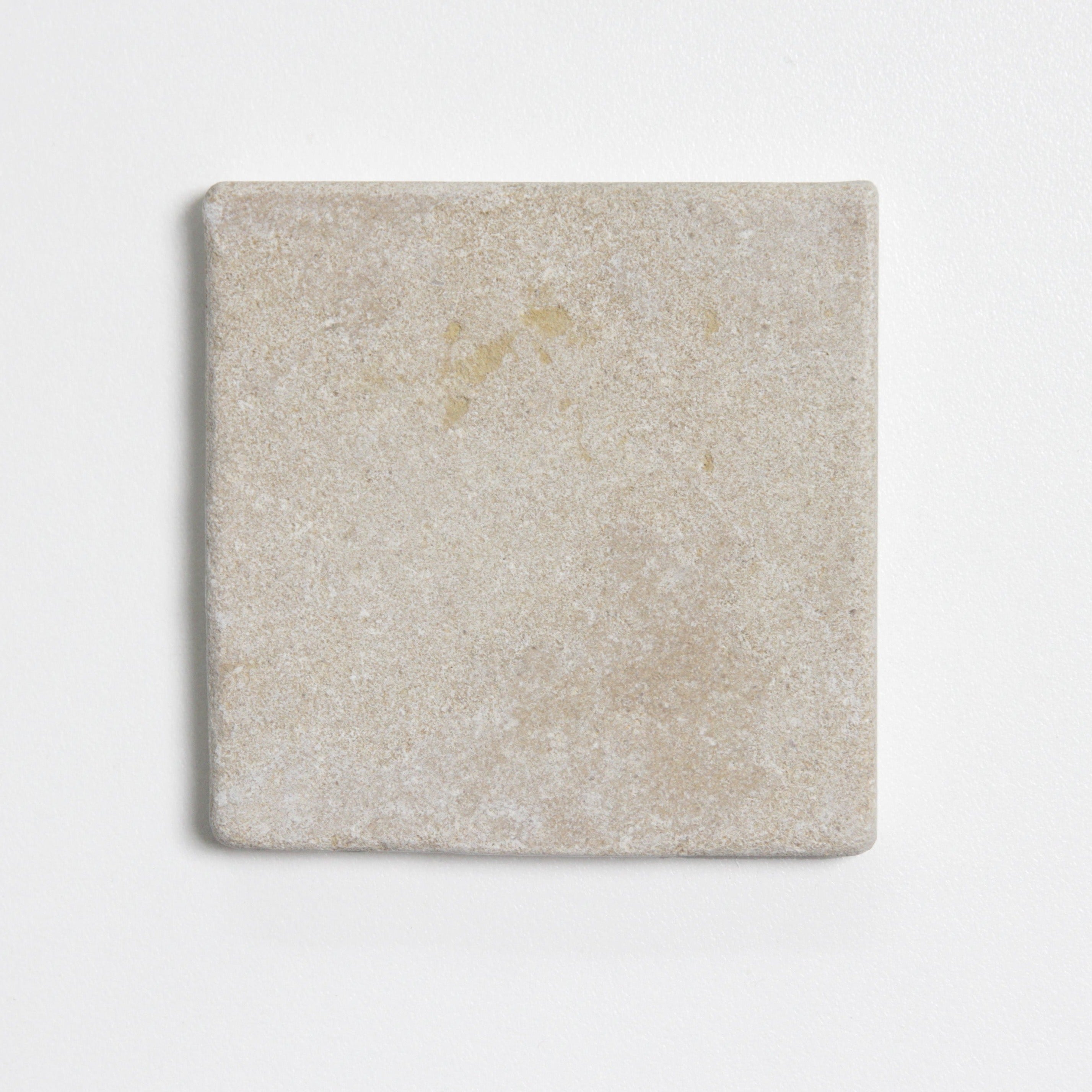
All Dunya Stone natural stone tiles feature a tumbled finish. This finish softens the edges of each tile and brings out the stone's natural, aged character - consistent with the overall aesthetic the range is designed to deliver. No polished, honed, or brushed finishes are available in this range.
The Mosaics
What is a Dunya Stone natural stone mosaic tile and how is it made?
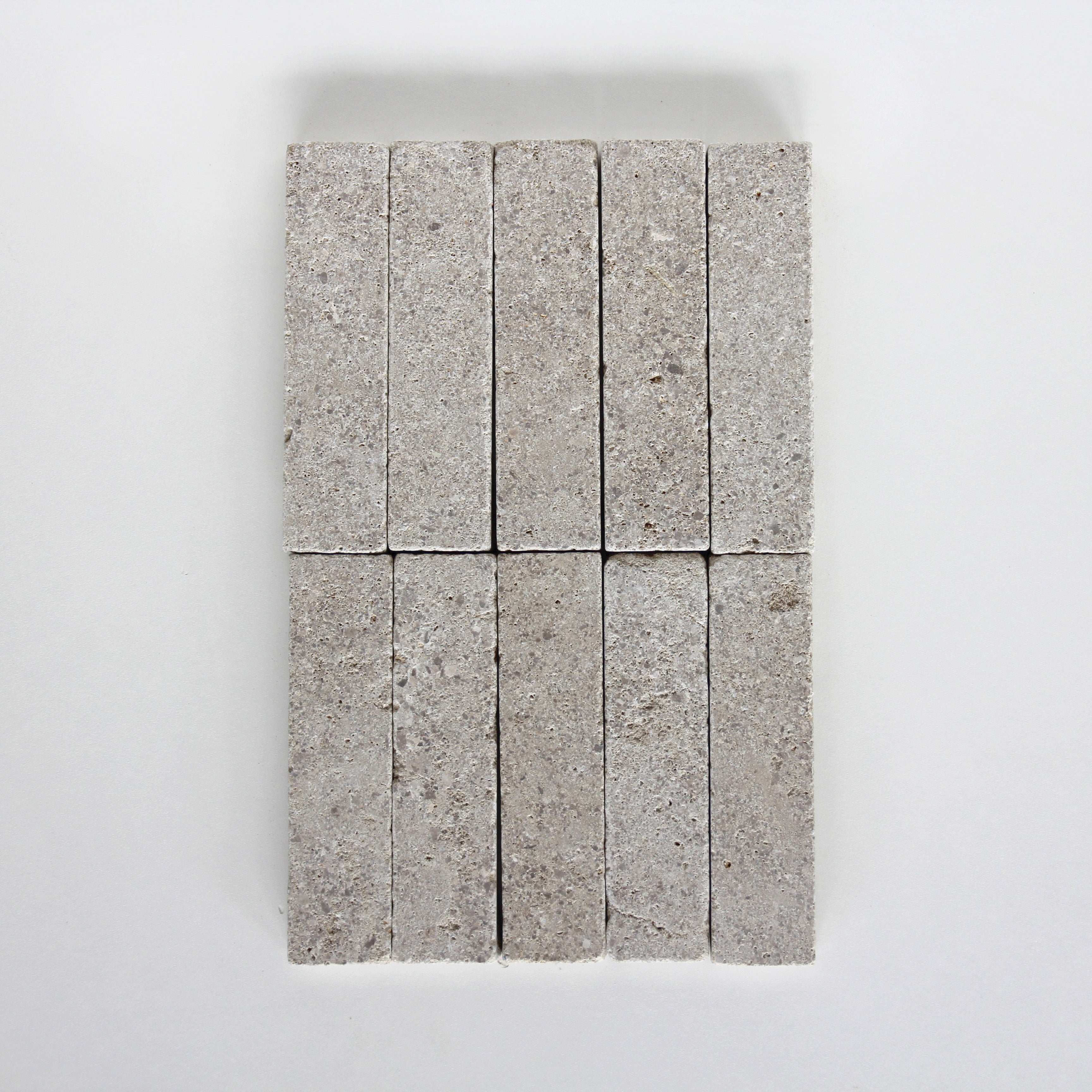
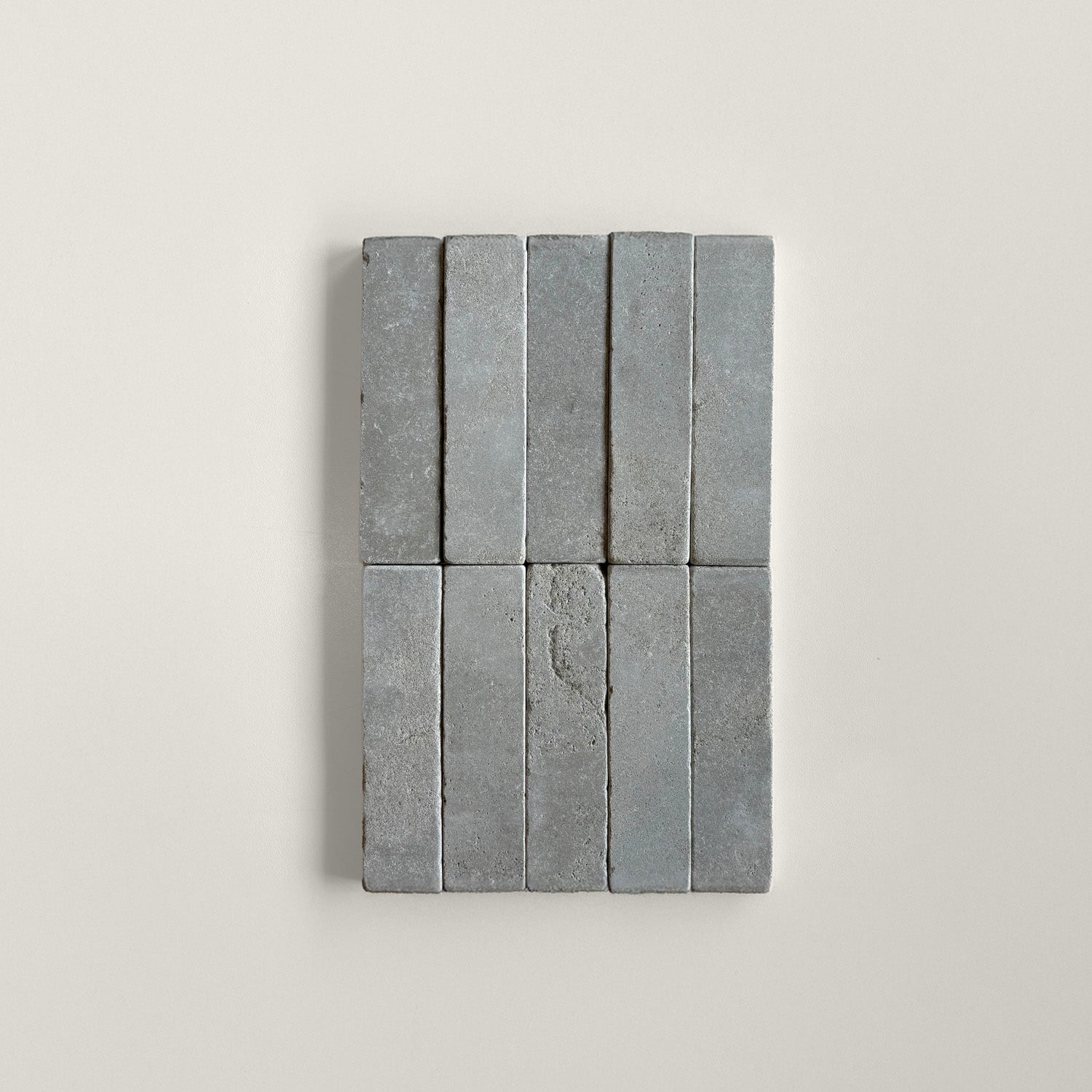
Dunya Stone natural stone mosaic tiles are created using the same tumbled stone from our tile range. Individual pieces are cut, tumbled into their organic imperfect Shape and assembled by hand onto a mesh backing sheet, allowing for intricate patterns and formats. The result is a natural stone mosaic tile that carries all the depth and character of the stone, in a format that is practical and efficient to install.
Can Dunya Stone mosaic tile sheets be cut to fit?
Yes. The mesh backing on Dunya Stone mosaic tiles can be cut with scissors or a utility knife between tiles to fit awkward spaces, edges, and corners OR to create your own custom pattern. For cuts that pass through individual tiles, a wet saw is required. Always dry-fit mosaic sheets before applying adhesive, and plan your layout so that any cut pieces fall to the edges rather than the centre of the installation.
Can individual tiles be removed from a Dunya Stone mosaic sheet?
Yes. If an individual tile on a natural stone mosaic sheet is damaged or not to your liking, it can be carefully removed from the mesh backing and replaced. Keep spare tiles from your original order for exactly this purpose - natural stone tile varies batch to batch, and a tile from your original order will always be the closest match.
Are Dunya Stone natural stone mosaic tiles suitable for floors as well as walls?
Dunya Stone mosaic tiles are suitable for wall applications and select floor applications. For floor use, confirm with your installer that the substrate, adhesive, and grout specification are appropriate for foot traffic. Because individual mosaic tile pieces are smaller in format, grout joints are more frequent - which can affect slip resistance and cleaning requirements on natural stone mosaic floors.
Suitability & Application
Are Dunya Stone tiles suitable for wall tiles, floor tiles, or both?
Yes. Dunya Stone natural stone tiles are suitable for both wall and floor applications in residential settings. Their durability makes them well suited to living areas, kitchens, bathrooms, and feature walls. Suitability for high-traffic or commercial natural stone tile environments should be assessed on a project-by-project basis in consultation with a qualified installer.
Can Dunya Stone natural stone tiles be used in wet areas such as bathrooms or showers?
Yes. Dunya Stone natural stone tiles can be used in wet areas including bathrooms and showers when proper waterproofing systems are in place and the stone is correctly sealed and maintained. In high-moisture environments, consistent sealing and gentle cleaning practices are especially important for natural stone tile performance. A gradual patina is to be expected over time and is part of the material's character.
Are Dunya Stone natural stone tiles suitable for outdoor use and pool surrounds?
Dunya Stone natural stone tiles are suitable for outdoor use and pool surrounds in applications that do not involve constant water submersion. However, the mesh backing and adhesive used to hold mosaic sheets together are not designed for continuous water submersion. Over time, this can compromise the bond, leading to mosaic tiles loosening or detaching.
For submerged applications such as pools, water features, or spas, natural stone tiles must be installed using methods and materials specifically suited to full immersion, as advised by your installer. We recommend speaking with our team to confirm the right format or product for your application before proceeding.
Dunya Stone natural stone tiles are not recommended for freeze-thaw environments unless specifically designed and detailed for those conditions. Always consult a qualified installer when specifying natural stone tiles externally. Tiles of Ezra cannot take responsibility for installation outcomes or unsuitable product selection.
Samples & Ordering
Can I order samples of Dunya Stone natural stone tiles before purchasing?
Yes. Natural stone tile samples are available for most Dunya Stone colours and finishes so you can see how the tone, texture, and surface character look in your own space before committing to a full order. Seeing natural stone tile in your own light before purchasing is always something we encourage.
Request your Dunya Stone samples directly here.
Can I mix batches of Dunya Stone natural stone tiles?
Dunya Stone is a natural material formed by the earth, and variation in tone, movement, and surface character is an inherent and celebrated feature of the natural stone tile range. Because of this, mixing batches is generally suitable and can still result in a cohesive installation. However, as with all natural stone tiles, slight tonal differences may occur between productions. We recommend dry-laying and blending tiles from multiple pallets or batches prior to installation to ensure a balanced distribution of variation. If your project requires a highly controlled or uniform appearance, please speak with our team before ordering.
Should I keep leftover natural stone tiles after installation?
Always. Natural stone tile varies from batch to batch, and an exact match from a future production run is never guaranteed. Set aside a small quantity of tiles from your original order - enough to repair a damaged area or replace a broken piece - and store them flat, indoors, in a dry environment. It is a small step that can save considerable time and frustration down the line.
Installation
Does natural stone tile require special adhesives or installation practices?
Yes. Natural stone tile requires specialised installation practices compared to ceramic or porcelain tiles. Because natural stone is heavier, more porous, and naturally variable, it should be installed using adhesives and mortars specifically formulated for natural stone tile, selected based on the substrate, tile thickness, and application. Proper substrate preparation, correct trowel sizing, full adhesive coverage, appropriate waterproofing in wet areas, and careful handling during installation are all essential. We strongly recommend working with an experienced natural stone tile installer to ensure the best long-term result.
Is my subfloor or substrate strong enough for natural stone tiles?
Natural stone tiles are heavier than ceramic or porcelain tiles, and not all substrates are suitable without additional preparation. Gypsum or plasterboard walls are generally not recommended for natural stone tile without reinforcement. For floor installations, your subfloor must be structurally sound, level, and capable of bearing the additional load of natural stone. A decoupling or isolation membrane is recommended - particularly over timber subfloors, newly screeded floors, or areas where movement is likely - to absorb any shift and protect the natural stone tiles from cracking. Always consult a qualified installer before specifying natural stone tiles over any substrate you are unsure about.
Should I plan my layout before installing Dunya Stone natural stone tiles?
Yes - and this step is worth taking time over. Before applying any adhesive, dry-lay your natural stone tiles across the installation area and step back. Check that veining and surface movement flows naturally, that tonal variation is evenly distributed, and that no two similar-looking tiles sit directly next to one another. For natural stone mosaic sheets, lay out full sheets in sequence and check alignment before committing. What you see in the dry layout is what you will live with - it is far easier to adjust at this stage than after the adhesive has set.
Sealing & Care
Do Dunya Stone natural stone tiles need to be sealed before and after installation?
Yes. Dunya Stone natural stone tiles are a porous material and require sealing to protect against moisture absorption, staining, and etching. We recommend sealing prior to installation, sealing again after installation and grouting, and periodic resealing every one to three years depending on use, traffic, and exposure. Natural stone tile sealing products should be chosen in consultation with your installer or stone-care specialist. Please review our Resources & Installation FAQs for more information.
How do I clean and care for Dunya Stone natural stone tiles to avoid etching or staining?
Caring for natural stone tiles is simple but must be consistent. Use only pH-neutral cleaners formulated for natural stone. Avoid acidic, abrasive, or bleach-based products - these can etch or permanently dull the surface of natural stone tiles. Wipe spills promptly, especially acidic or coloured liquids. Maintain an ongoing sealing schedule to protect against absorption. With the right care, Dunya Stone natural stone tiles age with grace and develop a patina that deepens their character over time.
EXPLORE THE FULL
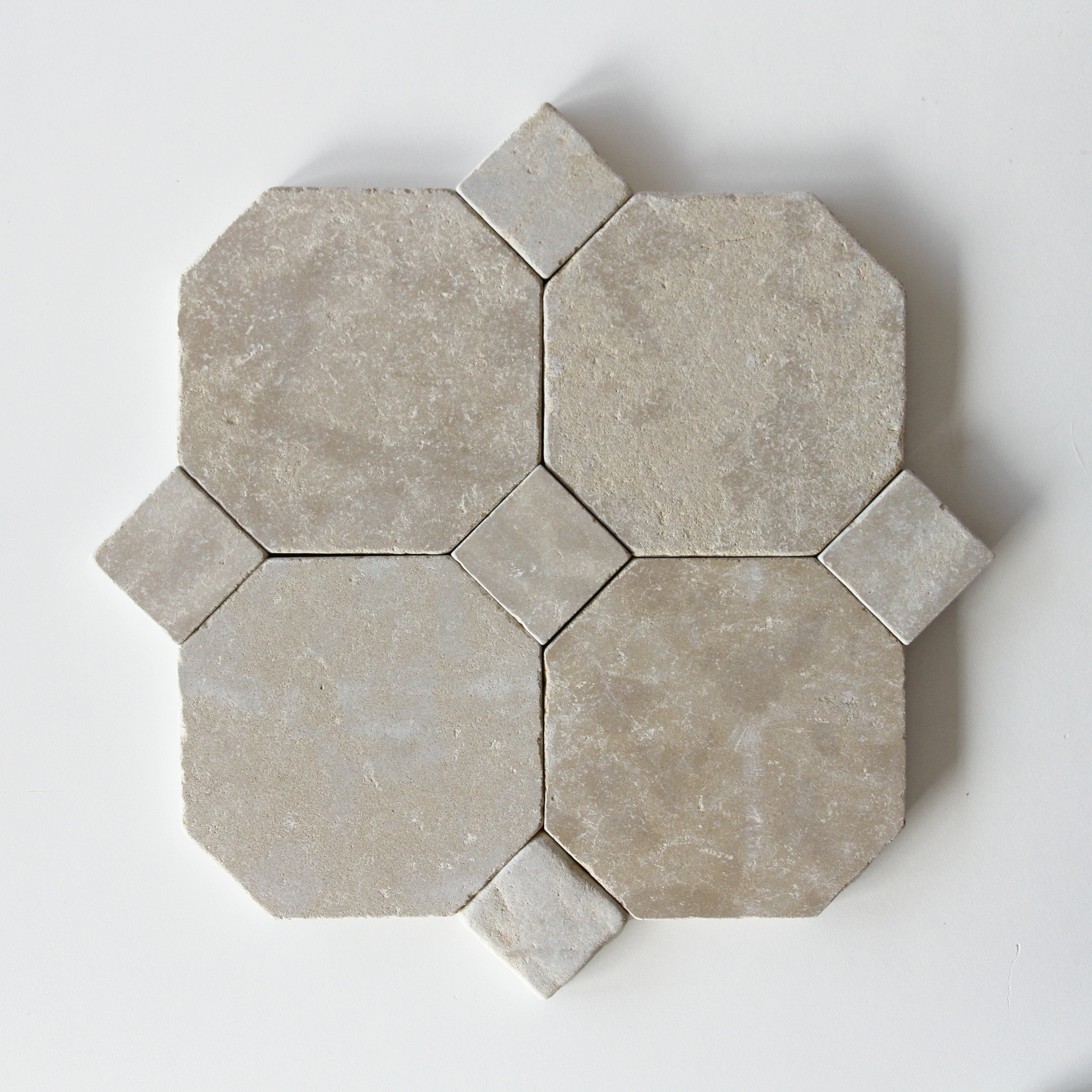
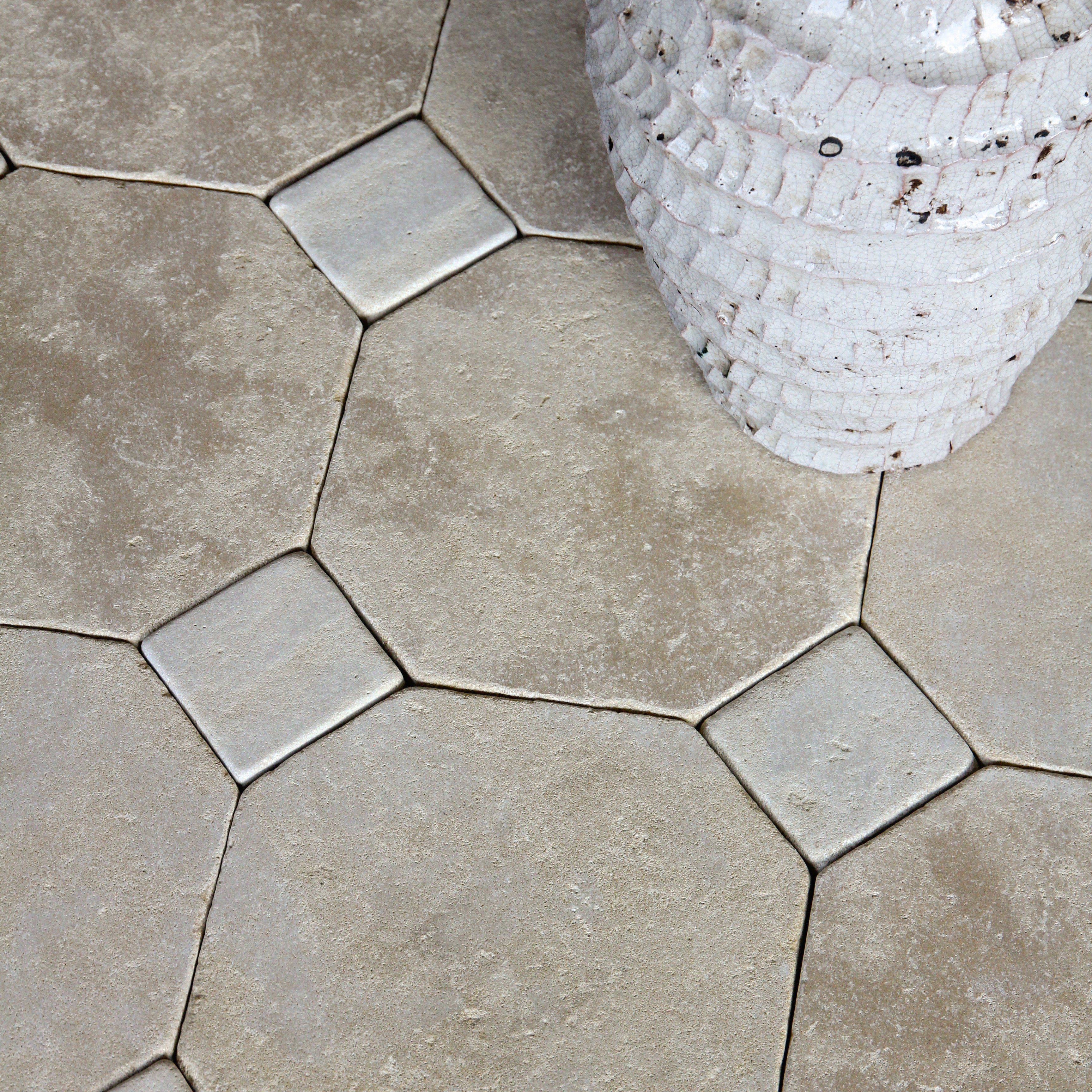
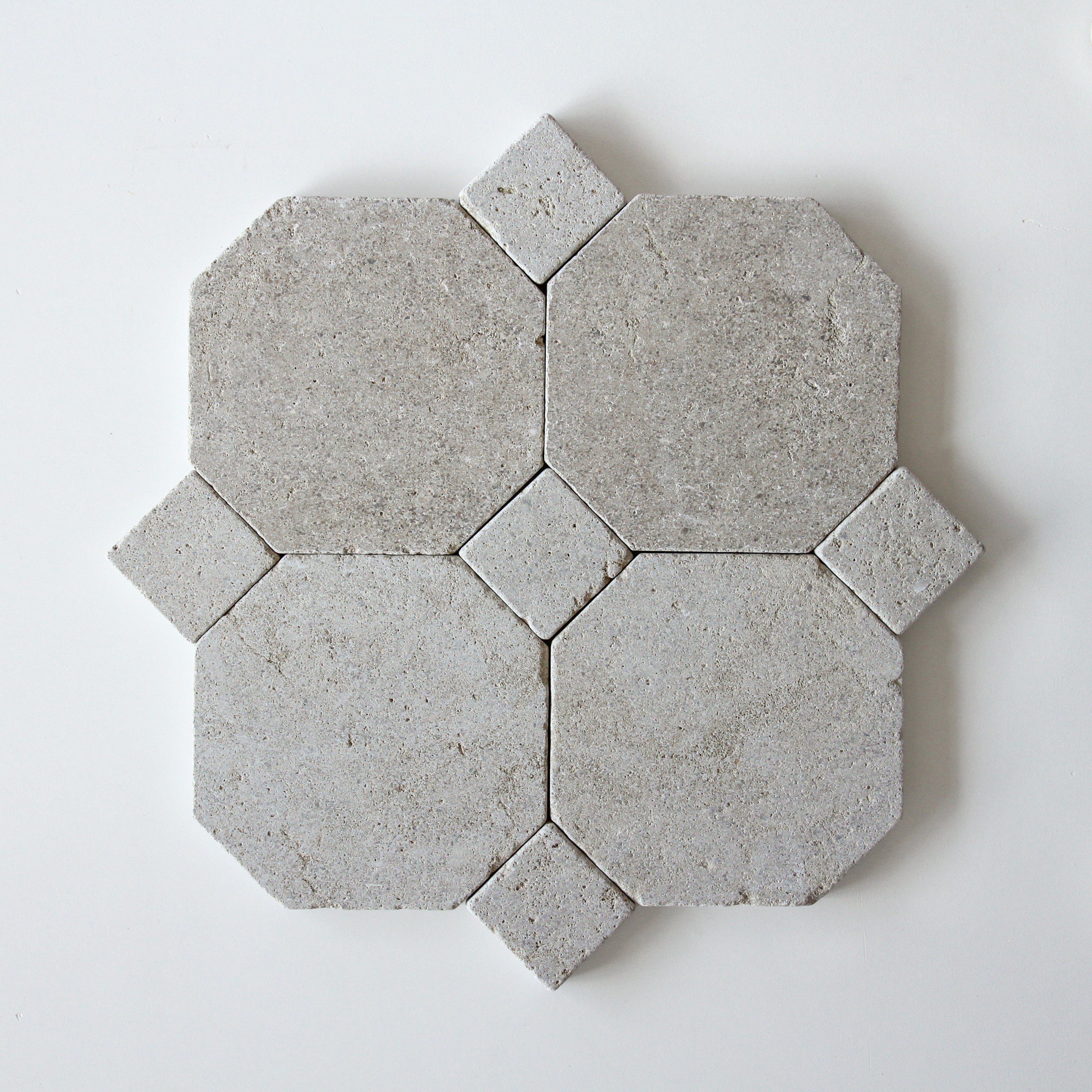
MOROCCAN LIMESTONE COLLECTION





Still Have Questions?
We’re here to help you navigate the details. Whether you’re exploring our ranges, comparing finishes, or seeking guidance on which tile best suits your space, our team is here to share the knowledge and confidence you need to decide.