
Can You Use Natural Stone in a Pool? A Guide to Limestone and Stone Underwater
It's one of the questions we're asked most often: can I use limestone, or any natural stone, in my pool?
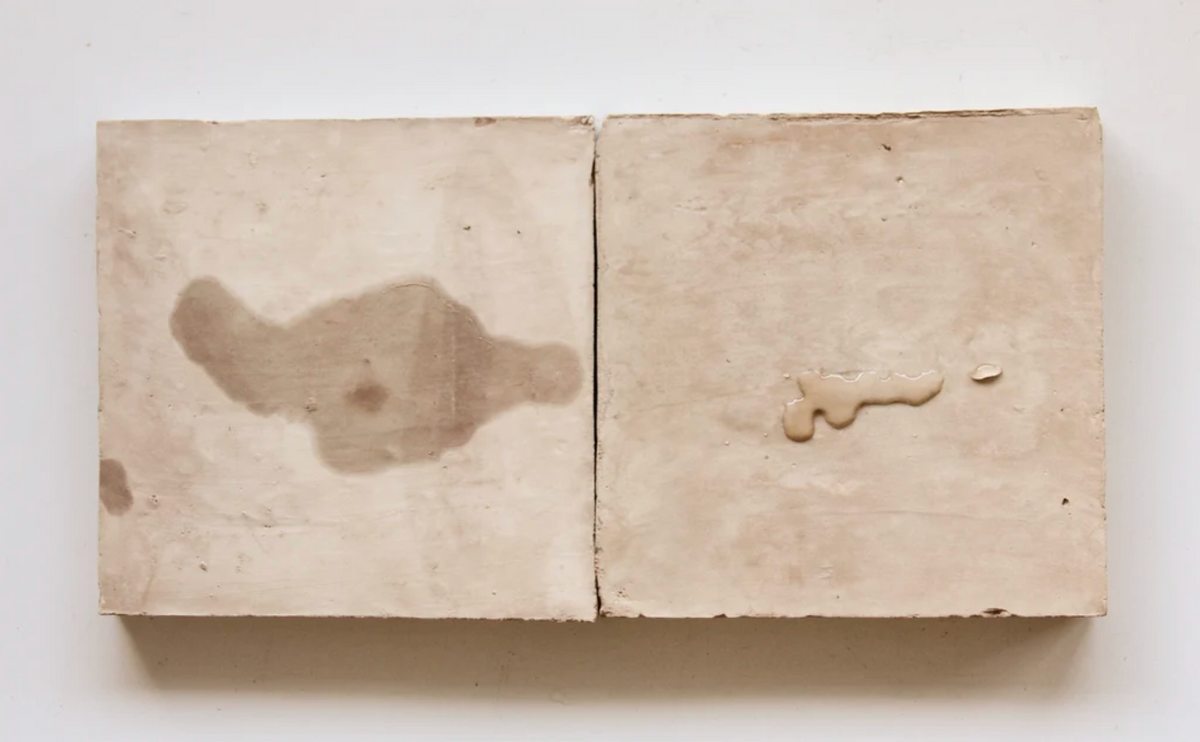
It's a fair question. Stone is porous, and we're used to thinking of water as its enemy. Yet across Morocco, Turkey, Italy and Spain, fountains, cisterns, hammams and pools built from limestone, marble and sandstone have been wet for hundreds, sometimes thousands, of years, and many are still in use.
This guide covers why that works, which stones suit which parts of a pool, where problems tend to appear, and what you need to do to avoid them.
The short answer: yes, with the right stone and the right installation
Natural stone has a long track record in pools and water features. Success depends far less on the stone being exposed to water and far more on two things:
- Choosing a stone suited to the job
- Installing it properly
Get both right, and a stone pool can be beautiful for decades. Get either wrong, and even a great stone can struggle.
Why stone can survive underwater for centuries
The damage many natural materials suffer doesn't come from being wet. It comes from being wet, then dry, then wet again:
- Water enters the stone.
- The water evaporates.
- Salts left behind crystallise.
- As the crystals grow, they press outward against the walls of the stone's pores.
- Over many cycles, that pressure causes deterioration.
Stone that stays permanently underwater largely avoids this cycle. There's very little evaporation, less salt crystallisation, moderated temperature swings, far less UV exposure, and stable moisture levels inside the stone. In that sense, fully submerged stone lives in a fairly gentle environment.
Know your pool's zones: where problems actually happen
Not every part of a stone pool faces the same conditions. Understanding the zones is the key to choosing and caring for your stone.
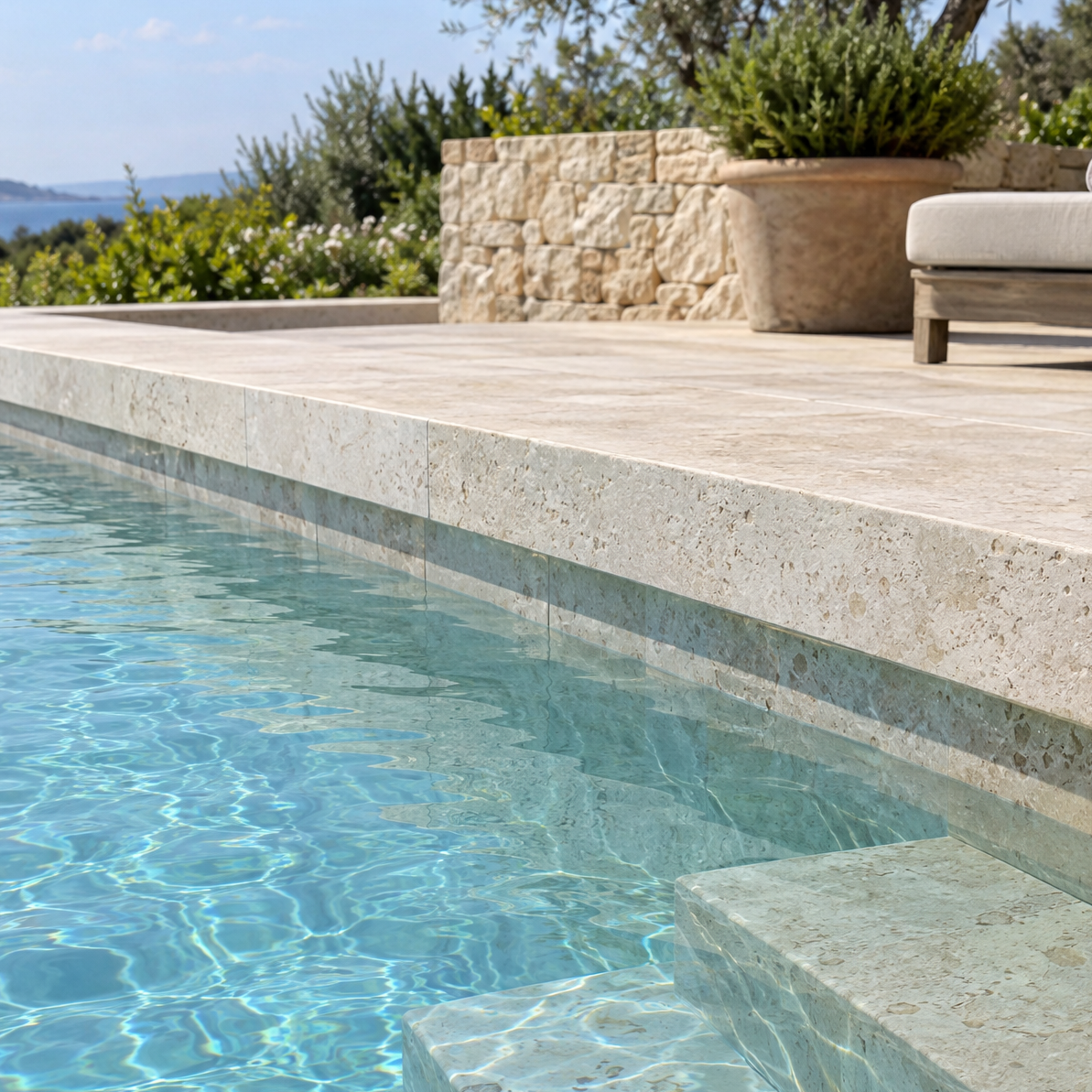
Below the waterline (fully submerged). Usually the easiest environment for stone, for the reasons above. The main concerns are water chemistry and the quality of the waterproofing and adhesives behind the stone.
The waterline. The hardest-working area in any stone pool, often called the evaporation zone. This is where wetting and drying happens constantly, evaporation is highest, pool chemicals and salts concentrate, the sun hits directly, and cleaning is most frequent. Expect scale build-up, mineral deposits and wear to show here first.
Coping (the pool edge). Coping gets splashed, dries in full sun, gets walked on barefoot, and in saltwater pools collects salt residue that crystallises as it dries. It's a prime spot for salt attack on softer stones.
Surrounds and paving. These areas deal with splash-out, rain, garden moisture and ground moisture from below. This is where efflorescence most often appears, and where slip resistance matters most.
Which stones work well in and around pools
Every stone should be assessed on its own merits, but these characteristics are good signs:
- Dense, low-porosity limestones. Many Moroccan limestones fall into this category. They've been used for centuries in riads, courtyards, fountains, hammams and water channels, and that long history in wet environments is one of the strongest indicators of suitability.
- Travertine (filled and honed or tumbled). A long-standing choice for pool coping and surrounds, with a naturally textured, cool-underfoot finish.
- Granite, basalt and bluestone. Very dense and hard-wearing, with strong resistance to salt and chemicals.
- Quartzite. Hard and dense, though it can be more slippery depending on the finish.
What matters most is the stone's measured performance: low water absorption, good density and strength, and suitable salt resistance, rather than its name alone.
Which stones can be problematic, and why
- Soft or highly porous limestones and sandstones. They absorb more water and salt, which makes them more vulnerable to salt attack, especially on coping and at the waterline.
- Stones with clay seams or clay-rich minerals. Clay can swell and weaken when wet, leading to cracking or delamination.
- Stones containing iron minerals. Some granites and sandstones contain iron that can oxidise in wet conditions and cause rust-coloured staining.
- Marble and limestone in poorly balanced water. Both are made largely of calcium carbonate, which reacts with acid. Water that drifts acidic can etch the surface over time.
- Polished finishes. Beautiful indoors, but slippery when wet and quick to show etching. Pools call for honed, tumbled, brushed or textured finishes.
Efflorescence, subflorescence and other common issues
Efflorescence is the white, powdery deposit you sometimes see on stone and paving. It happens when water travels through the stone or the bed beneath it, carrying dissolved salts with it. When the water reaches the surface and evaporates, the salts are left behind as a white residue. It's often cosmetic, but it's a sign that moisture is moving through the installation.
Subflorescence is the more serious version. The salts crystallise just below the surface instead of on it, and the growing crystals can cause flaking, powdering or spalling.
For most limestones, the water behind the stone is a bigger risk than the pool water itself. Common sources include:
- Inadequate waterproofing
- Groundwater pressure
- Poor drainage
- Mortar beds that stay saturated
- Moisture coming in from surrounding gardens and landscaping
This is why two identical limestones can perform completely differently in two different pools. The stone is the same. The installation isn't.
Other issues to watch for:
- Scale and calcium deposits at the waterline, usually from water that's out of balance
- Etching of limestone and marble from acidic water or acidic cleaners
- Salt attack on coping in saltwater pools
- Staining from leaves, algae or iron
- Slipperiness on surrounds and steps
How to get it right: a practical checklist
Before you choose
- Ask for the stone's technical data (water absorption, density, strength), not just a sample.
- Tell your supplier exactly where the stone will go: submerged, waterline, coping or surrounds. Different zones may suit different stones or finishes.
- Check the slip rating for any area people will walk on barefoot and wet.
- If you have a saltwater pool, mention it early.
During installation
- Work with a pool builder and tiler experienced with natural stone.
- Use proper waterproofing behind the stone, and make sure drainage keeps water from collecting beneath surrounds.
- Use adhesives and grouts rated for permanent immersion in submerged areas.
- Discuss sealing with your installer. A penetrating sealer on coping and surrounds, including the back and edges before laying, can help limit moisture and salt movement.
- Allow adhesives and grout to fully cure before filling the pool.
Once it's in
- Keep water chemistry properly balanced. Stone is far happier in water that doesn't drift acidic. Your pool professional can advise on the right balance for natural stone.
- Avoid acidic and harsh cleaners. Use pH-neutral products made for natural stone.
- In saltwater pools, rinse coping and surrounds with fresh water regularly so salt doesn't dry and build up.
- Pay extra attention to the waterline during cleaning, and address scale early.
- Reseal surrounds and coping as your sealer manufacturer recommends.
The short version
Natural stone has proven itself in submerged environments for centuries. Whether a stone pool succeeds comes down mainly to choosing the right stone for each zone and installing it properly, especially the waterproofing and drainage behind it, not simply whether it's exposed to water.
FAQ
Can I use limestone in my pool?
Yes. Dense, low-porosity limestones have been used in pools, fountains and hammams for centuries. Choose a stone with suitable technical properties and make sure it's installed with proper waterproofing and drainage.
Which natural stones are best for pools?
Dense limestones, filled travertine, granite, basalt, bluestone and quartzite are all common choices. The stone's measured porosity, density and strength matter more than its name.
Which stones should I avoid in a pool?
Soft or highly porous stones, stones with clay seams, stones with iron minerals that can rust, and polished finishes that become slippery and etch easily.
Why do white marks appear on stone around my pool?
That's usually efflorescence. Moisture carries dissolved salts through the stone, and when the water evaporates, the salts are left on the surface. It's a sign that moisture is moving through the installation, often from behind or below the stone.
Where do problems usually start in a stone pool?
At the waterline and on the coping, where stone repeatedly wets and dries, and in surrounds where moisture rises from below.
Does saltwater damage natural stone?
It can, mainly on coping and surrounds where salt water dries and leaves crystals behind. Choosing a dense stone and rinsing regularly with fresh water helps a lot.
Should I seal stone around my pool?
Sealing coping and surrounds with a penetrating sealer is commonly recommended. Talk to your installer about the right product and whether to seal below the waterline.